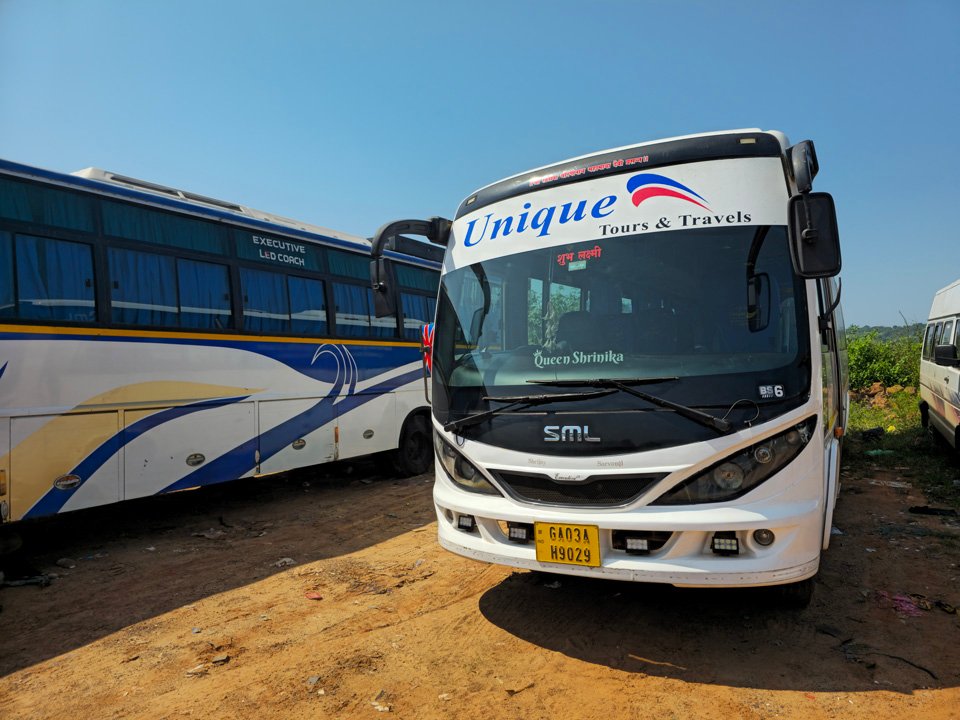
PRIVATE AIRPORT TRANSFER
AC BUS 20 seater
Confirm passenger capacity · Confirm luggage space
Request this vehicle ↗Confirm passenger capacity · Confirm luggage space
Request this vehicle ↗The best starting point for vehicle selection is a complete description of your party. Count all adults and children, then list the luggage that will travel with them. A seat count alone does not explain whether the group and its bags fit comfortably into the same category.
Large suitcases, cabin bags, a pram or a folding mobility aid use space in different ways. If an item is unusually bulky, say whether it folds and give a practical description. This helps the team discuss suitability without relying on a guess based only on the number of passengers.
If you do not know which category to choose, select the option asking for help. The booking team can review the details before confirming availability and the category in the quotation.
A sedan may be considered for an airport journey when the passenger and luggage requirements suit the available vehicle. Do not assume a particular suitcase capacity solely from the category name or from another vehicle you used previously.
Check the capacity shown on the vehicle card and ask the team about your actual bags. The final arrangement should leave appropriate space for the travellers as well as their belongings. An illustrative image describes a category; it does not guarantee the exact vehicle allocated to the trip.
If a particular model matters, request it specifically and ask whether it can be confirmed. The category and the model are different details, and the accepted booking should make the distinction clear.
A family MPV request should include the full group size and luggage. More passenger seats do not automatically provide the same luggage room when every seat is occupied. The team needs to consider how the vehicle will be used on the actual transfer.
If your party includes children, mention any child-seat request before booking. If a passenger needs easier access, describe that requirement as part of the enquiry. Do not assume a particular seat, step or accessibility feature from the category label alone.
Ask to confirm the available category, practical bag capacity and any requested model. For a return journey with additional luggage, review suitability again rather than assuming the arrival arrangement still fits.
A premium MPV category can be requested through the same enquiry process. Explain what matters for the journey, such as passenger space, luggage needs or a specific model preference, rather than relying on the word premium to define every feature.
Availability and the final category or model are confirmed with the quotation. A photograph can help you understand a listed vehicle, but it should be read together with the capacity details and confirmation. Do not infer amenities or equipment that are not stated.
For an important business or family journey, keep the exact request in the written booking conversation. This helps make clear which requirements were requested and which have actually been accepted for the transfer.
Exterior photographs help identify the vehicle or category presented by the operator. Interior photographs can show seating, and luggage-area photographs can help with packing questions. The pictures work best when accompanied by accurate capacity information.
A gallery should not be treated as a promise that any amount of luggage visible in a different arrangement will fit with your group. Seat positions, bag shapes and passenger use can affect the practical space available. Ask about your own combination of passengers and items.
Category illustrations are clearly labelled until actual vehicle photographs are uploaded. Confirm the allocation through the booking team rather than assuming a drawn or illustrative image is a photograph of the vehicle collecting you.
Mention folding prams, mobility aids, sports equipment, large boxes or other unusual items before the quote is accepted. Describe their size and whether they can be folded. This gives the team a useful basis for checking the arrangement.
Requests for accessibility features, a child seat or a particular seating configuration need explicit confirmation. An enquiry does not establish that specialist equipment is available. Ask what can be provided and decide whether the proposed arrangement meets your needs before booking.
Keep documents, valuables and essential personal items with you. Avoid sending medical records or identity documents simply to describe a vehicle requirement. Practical transport information is usually what the booking team needs for the initial discussion.
For a larger group, tell us the total number of travellers, all luggage and whether everyone arrives together. Do not divide the group into assumed vehicle loads before the team has reviewed suitability and availability.
If there are separate flights, explain whether the group wants to wait and travel together or request individual transfers. The waiting arrangement and number of journeys should appear in the quotation. A category booked for one arrival is not automatically available for several separate collections.
Any additional vehicle, different group arrangement or change of passenger numbers needs review. Confirm the revised plan in writing so the lead traveller and the booking team share the same understanding.
Before accepting, check the category, passenger count, luggage description and route. If the quote is category-based, understand that distinction. If an exact model has been accepted, keep the written confirmation with the booking details.
Tell the team if your requirements change. A new suitcase, another passenger or a different access point can affect suitability even when the journey date remains the same. The appropriate response is a new availability or category check, not an assumption that every change fits the original arrangement.
Use the vehicle enquiry button to start a request, then provide your journey details. Your selection expresses a preference; the team still needs to confirm the vehicle and the complete transfer quotation.