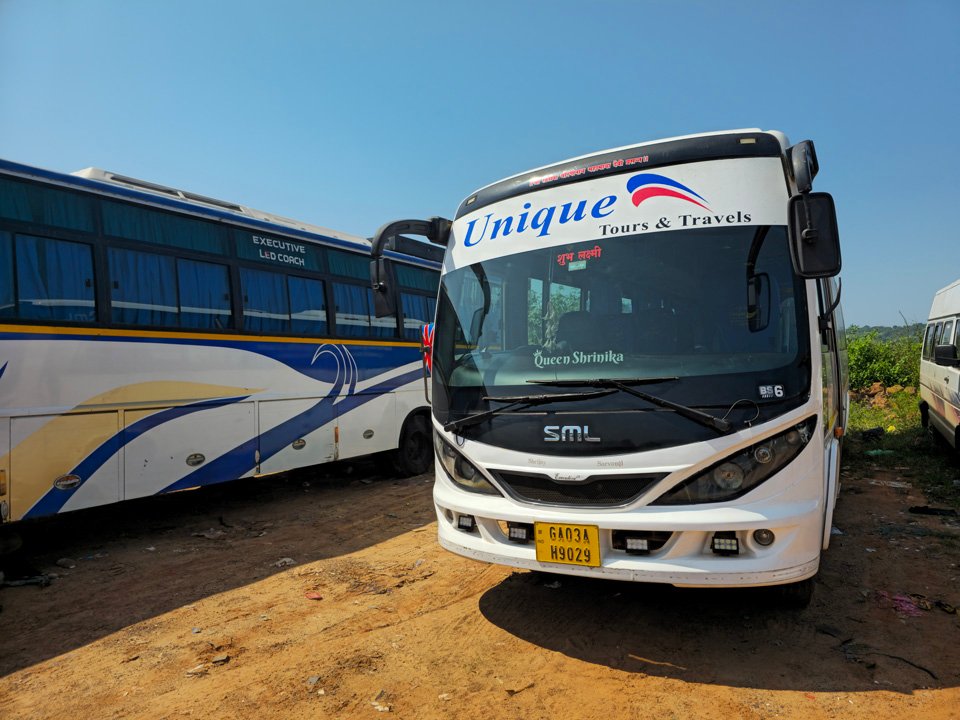
PRIVATE AIRPORT TRANSFER
AC BUS 20 seater
Confirm passenger capacity · Confirm luggage space
Request this vehicle ↗Konkan covers many different destinations. Your accommodation may be outside the town centre or reached by a smaller local road. Give us the property name and exact address so we can check access, vehicle suitability and the transfer fare.
We accept enquiries for airport journeys to Malvan, Tarkarli, Kudal, Vengurla and Sawantwadi. For another location, choose Other destination and describe the journey. We will check whether the requested transfer can be arranged.
Confirm passenger capacity · Confirm luggage space
Request this vehicle ↗Explore this guide:
Konkan is a regional description, not a single road address. An airport journey to a home in Kudal, a stay near Tarkarli and a property in Vengurla can have different routes and requirements. Giving the individual destination helps the booking team assess the journey you are requesting.
Start with the property or house name, town, full address and a relevant landmark. Add a map pin if the host provides one. If directions include a particular gate or approach, keep those instructions with the booking details rather than relying on a general town name.
The enquiry should also say whether you need a direct airport transfer, a return airport drop or a different itinerary with stops. These are distinct requests. A clear description helps separate the road transfer from sightseeing, local vehicle use or onward travel that needs its own arrangement.
Sindhudurg Airport is also known as Chipi Airport. Before requesting the transfer, compare the name on your flight itinerary with the airport pickup location. Mopa and Dabolim are different airports and should not be treated as interchangeable with Chipi.
Give the flight date and arrival details, then describe the onward address. If a relative or accommodation host is arranging the transfer, ensure the lead traveller receives the actual meeting instructions and booking contact. The person who booked may not be the person collecting luggage or looking for the driver.
If the flight or airport changes, ask the booking team to review the request. A quotation and meeting plan for one arrival location should not be used for another airport without an updated agreement.
For a Malvan journey, identify the accommodation, family home or other agreed destination. A town name alone may not indicate the practical drop point. Share any approach instructions supplied by the property or the person receiving you.
If you plan to visit an attraction before reaching the accommodation, describe that as an additional request. The airport transfer is not automatically a sightseeing vehicle available for an open-ended visit. Stops, waiting and any additional itinerary should appear in the quotation.
For a return airport journey, confirm the collection address separately. You may be staying at a different property by departure day, and the luggage or passenger count may change. Review those details using the actual return plan rather than copying the arrival request without checking.
Tarkarli is a coastal destination in Sindhudurg. If your stay is described as near Tarkarli, include the individual property location rather than assuming the accommodation is at a single common pickup point. Nearby place names and beach descriptions may cover different addresses.
Ask the host where a vehicle can stop and whether guests need to walk from the road entrance to the property. Explain if your group has heavy bags or a passenger who needs easier access. The practical drop point should be understood before a vehicle category is accepted.
Beach visits, activity bookings and other excursions are separate from the airport road journey unless specifically included. If you want help with a broader itinerary, request it clearly so the transfer fare and any additional service can be discussed independently.
A Kudal transfer may be to accommodation, a family address or an onward meeting point. Describe the purpose only as far as it affects transport: the exact location, any timing requirement and whether another person or service is meeting you.
If there is an onward rail or road connection, provide the relevant time and meeting details. The booking team can consider the requested schedule, but a road transfer should not be treated as a guarantee that every separate connection will be reached under all conditions.
When the destination is a public place, agree a recognisable meeting point rather than leaving the driver to interpret a broad location. If you will be collected by a relative, make sure both parties know which address and entrance have been agreed.
For a Vengurla journey, send the destination name used by the host together with the full address. A locality, house name or beach description may need a landmark or map pin to identify the final point clearly.
The proposed vehicle should be suitable for passengers and luggage as well as the final access. If a property advises that a larger vehicle cannot reach its entrance, share that information before requesting a category. Do not assume the driver can change the vehicle allocation or provide another local connection on arrival.
If the last part of the journey requires a separate arrangement, ask the host and booking team how the handover will work. The road transfer quote should specify the agreed drop point so luggage handling and passenger expectations are clear.
You can request a journey to Sawantwadi or another Konkan address through the Other destination option when the place is not listed. Enter the full location and travel date. The booking team will check whether the route and requested category can be arranged.
For a less familiar address, include directions from the host rather than a broad description such as near the market or near the beach. A named landmark can be useful, but it works best alongside the actual destination rather than as the only instruction.
If availability cannot be confirmed immediately, keep the request separate from a completed booking. Wait for a quotation and written acceptance before planning around an allocated vehicle. A submitted form records the enquiry but does not establish that every regional route is available on every date.
A visit to family may involve a home that is easy for relatives to identify but not obvious to someone approaching for the first time. Ask the receiving family member for the full location, a useful landmark and an accessible road meeting point.
Include everyone travelling in the passenger count. Explain large suitcases, gifts, a pram or other bulky items rather than estimating luggage only from the number of travellers. A category suitable for the seats may need review when additional items are included.
If relatives plan to join the journey or meet the party partway, describe this before the quote is accepted. Additional pickups or drops should be agreed as part of the route, not assumed to be included because they are within the same broader region.
A smaller property may not operate like a hotel reception. Check how the host receives guests, whether someone will be present and where keys are collected. These details should be settled with the property alongside the vehicle arrangement.
If the host asks you to meet at a different address, tell the booking team before confirmation. A stop for keys or a wait for the host may affect the quoted service. The driver should not be expected to resolve an unknown accommodation handover without an agreed plan.
Keep the host's contact details accessible, and make sure the lead traveller can contact the transfer team after landing. If another person arranged the trip, share the current address and meeting instructions rather than an old message thread with conflicting directions.
Some private properties are reached through approaches that may not suit every vehicle category. The accommodation host is often best placed to explain the last part of the access. Share any restrictions that the host identifies before the category is confirmed.
A practical road drop point can be different from the property's exact front door. If that is the case, agree how passengers and luggage will reach the entrance. Do not assume a particular luggage-carrying or mobility-assistance service is available unless it has been explicitly arranged.
Describe practical needs in plain language. For example, explain the amount of walking a traveller can manage or whether a folding mobility aid is being carried. Sensitive personal or medical documents are not needed for the initial transport suitability discussion.
An airport transfer connects the agreed pickup and drop points. A sightseeing itinerary includes visits and waiting at places along a route. Full-day vehicle use has its own time, distance and service conditions. These bookings should not be treated as identical simply because the same category of car might be used.
If you want to visit several places after landing, list the proposed stops and any fixed timing. Ask for a quotation that clearly describes that itinerary. Attraction access, activity availability, tickets and boat services are not automatically included in a road-transfer fare.
If plans remain flexible, tell the booking team what is essential and what is optional. This gives a more useful basis for discussion than asking for an unlimited itinerary at the price of a direct airport drop.
Road travel time depends on the actual destination, chosen route, conditions and stops. A general estimate for the Konkan region cannot replace a planning estimate for one property. Ask the team about the individual journey, and keep time-sensitive commitments in mind when considering the schedule.
Conditions can change, including traffic, rain and local access. If a host reports an approach problem, share that information promptly. An updated pickup or drop point may need to be agreed before travel.
Avoid building an itinerary around the assumption that every flight and road connection runs exactly to the original timetable. A confirmed transfer provides an agreed service, while the wider trip should still allow sensible flexibility for circumstances outside the booking team's control.
Choose the category using the actual passenger and luggage requirements, not the name alone. A family group with several large suitcases may need a different arrangement from the same number of people carrying small bags.
For an exact model request, ask whether it can be confirmed for the date. Photographs can help show a category or vehicle, but an illustration is not an allocation. The accepted booking should make clear what category or model is being supplied.
If you have a special item, describe its size or whether it folds. This can be more useful than only naming the item. Confirm suitability before booking so the team can consider space and access together rather than addressing them as separate surprises at pickup.
Check that the quotation identifies the airport direction, exact address, date, category and agreed stops. Ask whether the price is per vehicle and whether a return journey is included. If a fare is described as starting from a certain amount, confirm the conditions that apply to your actual destination.
Discuss parking, applicable road charges, waiting and payment before accepting. If the group needs an invoice, mention the request through the agreed booking channel. Keep the acknowledgement for any advance and the remaining payment arrangement with the confirmation.
A quote should not be compared with another service using only the headline amount. The drop point, vehicle, time allowance and included services may be different. Compare the journey you need, not just two numbers presented without their conditions.
For a return to Chipi Airport, provide the flight departure details and the actual address from which you will leave. The departure property may differ from the arrival destination. Confirm the passenger and luggage count again if the group has changed.
Agree a vehicle collection time that considers the road journey and the airline's current reporting requirements. A flight departure time is not the same as a pickup time. If the airline changes the schedule, ask the team to review the collection plan rather than assuming it adjusts automatically.
Have the travellers and luggage ready at the agreed meeting point. If checkout, a locked gate or a host handover may affect departure, arrange that in advance. Clear preparation helps the pickup proceed against the plan that has been confirmed.
Send the airport direction, date, full destination, passenger numbers and luggage description. Add the flight details and any stops. If you are unsure about an access point or category, explain the uncertainty instead of supplying a guess as a confirmed fact.
Call or WhatsApp +91 9168820213, or email help@sindhudurgchipiairporttransfers.com. If you used the website form, keep the reference shown after submission and include it when following up.
The booking team will review the journey, check availability and provide the relevant quotation. Treat the trip as confirmed only after the request has been accepted and the agreed payment conditions have been met.
Accommodation directions and vehicle instructions should support each other. If a host sends a revised location, ask whether it replaces an earlier pin or simply describes a different entrance. Send the current version to the booking team before the journey is confirmed.
A host can clarify property access, while the booking team confirms the quoted road service. Avoid assuming that either party has seen messages sent only to the other. A simple written summary with the date, address and meeting point is often more useful than several disconnected voice messages.
For an airport drop, tell the host when you need to leave and arrange any checkout or key handover in advance. If the property requires guests to meet a vehicle at a road entrance, check the luggage arrangement and allow time to reach that point. The agreed collection time should refer to the actual meeting point rather than an undefined stage of checkout.
Before accepting a quotation, read the airport name, calendar date, route and full addresses together. Check that all passengers, luggage and extra stops have been described. If any item is provisional, make sure the team knows it still needs confirmation.
Review the category or model basis and any special request. Check parking and applicable charges, waiting conditions and the payment arrangement. If someone else will travel, share those details with the lead passenger and confirm the contact number to use on the day.
For arrival, keep the pickup instructions available after landing. For departure, agree the vehicle collection time separately from the flight departure time. If plans change, ask for an updated agreement rather than treating the original quote as valid for an unlimited range of dates or destinations. These checks are practical ways to prepare the journey without relying on unsupported claims about the route.
You can start an enquiry before every accommodation detail is settled, but identify what is provisional. A town or locality can help begin the discussion; a final hotel or address is needed for an exact journey quotation and pickup or drop plan.
When the property is confirmed, send the full details using the existing enquiry reference. Ask the team to review any difference in route, category, timing or fare. Do not assume that an initial estimate for one locality is the accepted price for a different address.
If you are comparing several stays, keep the transfer questions separate enough to identify which quote relates to which address. Once you choose the property, retain only the latest accepted transfer arrangement for operational use. This helps avoid a driver or traveller following a pin from an earlier accommodation option.